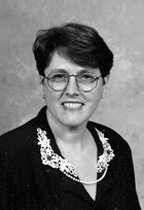
Nancy Evelyn Allen
** Available
as a Speaker for Women's Groups **
~~~~~
LEARN MORE!ORDER!
COVENANT WOMAN BOOKS!
|
About the Author
Nancy Evelyn Allen, MACE, is the author of the Covenant Woman series. She spent six years researching and writing her books. The Covenant Woman: Growing The Church won SECOND PLACE in the Bible Studies division at the 2007 Blue Ridge Christian Writer's Conference, and The Covenant Woman: Created and Chosen won FIRST PLACE at the 2008 competition.
She writes a bimonthly column for the Nolensville Dispatch and the Eagleville Times and has also recorded 87 vignettes for WNAH Christian Talk Radio, 1360 on the dial.
Nancy wrote her first book as a requirement for her Masters Degree at Southern Baptist Theological Seminary. While working at The Baptist Sunday School Board (LifeWay), she was published in Youth Leadership Magazine. She is also published in Mature Living Magazine and two anthologies—Gathering: Writers of Williamson County and Barack H. Obama: Vision to Victory. She has written numerous articles and pamphlets for church use. Nancy also has a Southern fiction book titled Daddy Alb.
Nancy is a member of the Tennessee Writers Alliance and the Williamson County [Tennessee] Council for the Written Word.
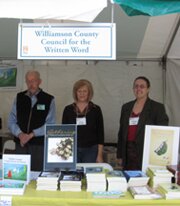
Nancy Allen (R) with her books at the 2009
Southern Festival of Books in Nashville, Tennessee
|
The Covenant Woman
The Covenant Woman is published in three volumes: The Covenant Woman of the Old Testament, The Covenant Woman of the New Testament, and The Covenant Woman of the Bible Study Guide. The books follow the Bible narratives, while highlighting the activities and contributions of women. Each book stands alone; however, all three books help readers have a fuller understanding of who God is, how Bible women faithfully served Him, and how women today can continue that legacy.
When women study the Bible
from the womans point of view,
women remember what they have studied.
|
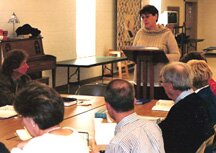
Available as a Speaker
for Women's Groups
Sample Topics:
"Lady Wisdom"
"Women Who Ministered with Jesus"
"Women in Jesus' Childhood"
"Women in Military Conquest"
"Jesus' Ministry of Healing and Compassion"
|
|
ABOUT THE COVENANT WOMAN SERIES...
The intent of these books is not to disparage men, but rather to bring women face to face with men in parallel equality. God, Himself, initiated the reciprocal oneness of human relationship when He brought Eve to Adam and placed her in front of him. Woman came from man and henceforth mankind comes from woman.
This concept, however, is more profound than human marriage. God created Adam and Eve in His own Image. God’s Image is not only male, but also female! The image of God embraces both genders!
From the onset of the Scriptures to the consummation, God is leading His readers to encounter His image, embrace Him in relationship, and declare their love for Him in a marriage that is undefiled. Therefore, God has used both males and females when calling and shaping a people to be His own. The first women laid the foundations. It was through the women that nations were formed and it was through the right women that the promise was given. Although cultural norms often put limits on women, both the Old and New Covenants highlight covenant women who were used to further God’s purpose. It is profoundly evident that the women’s stories in the Old and New Covenants play a vital role in sustaining the Jewish and Christian faiths.
To facilitate study, with each major thrust, women are grouped together in order to acclimatize the readers and students to the times and circumstances from which the Bible women functioned. The Bible Book Summary is intended as a resource to bring harmony to the scene and provide a look into how God and the writers used the female in their script. Given the wide range of options about dates, the dates recorded herein are provided for the sole purpose of chronological narrative. At the end of each chapter there is a side bar called 21st Century Perspective and another called, To Ponder, with questions to aid in making the story personal to the readers. Finally, a lesson plan is provided For the Teacher, featuring four steps: Introduction, Instruction, Internalize and Infold.
Women through the ages have a common bond. We are wives, mothers, daughters, grandmothers, granddaughters, mothers-in-law and daughters-in-law, aunts, nieces, and cousins. Women live in relationship. We function within our cultures. We work and play, give and take, cry and laugh, and while we are fulfilling our obligations to our fellowman and society, our highest calling remains the same: We are to love God with our whole being. The bride of Christ knows no gender. God does not allow for excuses. We belong to Him and we are invited to the marriage supper. (Revelation 19:9)
It is my desire that women everywhere will accept God’s marriage proposal!
|
|
"Little Stories about You and Me"
Nolensville Dispatch
A Family Dinner
A breeze was blowing; even so, it was warm for March. The large extended family had gathered for their annual Easter dinner. The Smith’s two-bedroom clapboard house was not large enough to hold everyone comfortably, but it was their turn and besides they liked the homey atmosphere brought on by the crowd. The women were busy in the kitchen, chatting, laughing and loving being together as they prepared the enormous feast. The men seemed to be in the way in the house so they meandered to the front porch, spinning tales as the children played ghost in the grave yard, running and squealing alongside the house. They planned to have an egg hunt after dinner.
The mid-day meal was something to behold. Sally had baked one of Jim’s finest hams. He raised the best hogs in the country, if she did say so herself. However, best she could remember, not everybody liked ham, so she had also baked a turkey and fried up a couple of chickens. With all the fixings, they would have plenty. There was always enough left over to feed an army.
The men sat in the white rocking chairs and along the edge of the shaded porch talking.
“That ole Yorkshire sow had her pigs yesterday,” Jim said.
“How many did she have?” asked Jim’s nephew, Mike.
“She had twelve, but she ate two of them.”
“What makes a hog do that?” Mike asked.
“She’s just a darn fool, I guess. They sure are pretty, so white and clean, cute little fellows.”
“Let’s go see them,” Mike said, stepping to the corner of the porch and sticking his head around the corner. “Hey, kids want to go out to the barn to see some baby pigs?”
Mike’s boys came running. Clay was four years old and Tommy was two. Since they lived in the city, they had never seen a baby pig. Mike put out his cigarette and took Clay’s hand and swung Tommy on his hip as they walked across the grassy lot to the shed where the pigs were kept. Wide-eyed, the boys peered into the shadowy pen.
“Look daddy, the babies are snuggled up close to their mommy,” Clay said.
“They’re sucking, getting their dinner,” Mike said.
Tommy squirmed. “Let me hold him.”
“I don’t think the mother pig would take too kindly to that. A sow can get mighty testy when somebody’s fooling with her young,” Jim said.
The boys were excited as they ran ahead of the men back to the house. Dinner would be ready soon. Everyone was getting hungry. The men settled back on the porch and the children went back to playing in the side yard, or so they thought. Jim was in the middle of telling about how his bull had jumped the fence and gotten into a fight with his neighbor’s bull when they heard Clay screaming. “The sow’s got Tommy.”
The talking stopped. Mike was on his feet and running toward the barn. Jim was right behind him. Then they saw him; Tommy was running toward them. His clothes were torn. He was covered in mud and blood. His eyes were set, solid white.
The women swarmed out the door to see what the ruckus was about. Tommy’s mother grabbed Tommy and jumped in their car. Mike drove with the lights on and the horn blowing causing vehicles to pull to the side of the road to let them pass. The hospital emergency room was full, but they took Tommy ahead of the others. After examining Tommy the doctor assured his parents a few stitches and a good bath would make Tommy almost as good as new.
When the sow had seen Tommy standing in the doorway, she ran over him getting back to her piglets causing him to hit his head on a nail on the side of the shed. She stepped on his back leaving a gash while burying his face in the mud.
Sows can weigh as much as 600 pounds and are dangerous, especially when they have babies. Tommy was a fortunate little boy. Had he been inside the pen, there may have been a different story to tell.
Dinner was on the table, cold, and untouched. No one seemed to be hungry.
|
|
|
Southern Fiction
Daddy Alb
Synopsis of Daddy Alb
The Suttons are forced to sell part of their plantation and move to 500 acres closer to the Appalachian Mountains. Somewhat isolated, two boys—one white and one black— forge a friendship with lasting consequences.
Daddy Alb is a 73,000-word novel set in eastern Kentucky just after the turn of the twentieth century. Although the Josephs are no longer slaves they have chosen to stay with the Suttons. Both families reap benefits from their merger.
As adults, Alb Sutton and Nuley Joseph continue their friendship and promise to take care of each other’s families. When Nuley is killed by a mule, Alb looks after Nuley’s wife, Sadie as best he can. Even though Nuley and Sadie tried, they never had children. On the other hand, Alb and his wife, Lessa, produced eight boys. Sadie mourns the loss of Nuley and the loss of motherhood as she lives alone in the cabin in the Hale Holler.
Alb’s reckless brother, Joe—who is in trouble with just about everyone, including the Ku Klux Klan, the Tobacco Association, jealous husbands, his wife and his own family—rapes Sadie. Out of shame Sadie keeps her secret until she is pregnant. Joe tries to force Sadie to have an abortion, but she will not. When Sadie finally tells Alb, he devises a plan to conceal the identity of the baby’s father.
On a Sunday night at dusk Joe is standing at the edge of his front porch smoking his pipe when he is shot and killed. Alb believes Lessa’s, brother, Jimmy, has murdered his brother, Joe, so he tells the sheriff what he knows. Jimmy is arrested and brought to trial. However, after talking to Sadie, Alb changes his story and lies to get Jimmy off. Jimmy is ultimately found innocent.
Annie, Joe’s widow who is a midwife, delivers Sadie’s son. Annie doesn’t know she is delivering her dead husband’s child. Sadie names him Nuley Mac Joseph after her husband, Nuley, and after Daddy Alb whose middle name is Mac. Mac means ‘son of.’ The Suttons call him ‘Kongo Joe.’ He has a happy childhood until his mother goes blackberry picking in the Curr Holler and is bitten by a rattlesnake and dies. Daddy Alb convinces his wife, Lessa, to take Joe in by telling her she will have a ‘house boy.’ When Joe came to live with the Suttons, Avery, Alb and Lessa’s fifth son has undulant fever and is unable to walk. Joe helps Avery and Avery helps Joe. They become friends and support each other throughout their childhood until Avery marries. Avery’s wife, Lucy, is unaccustomed to black people and is afraid of Joe. So when Avery asks Joe to avoid coming to his house when Lucy is alone, Joe is so upset he leaves the Suttons and goes to live in Boonetown.
Daddy Alb dies of an apparent heart attack. At Daddy Alb’s funeral wake, Avery learns Joe is his first cousin and both Avery and Joe learn that their mothers killed their fathers. They share secret truths they will keep for the rest of their lives.
|
|
|
|
Nancy Allen is available as a speaker
for women's groups.
More Sample Topics:
"In the Image of God--Highlighting Eve"
"The Right Women--in Early Biblical History"
"Women in Moses' Life"
"Lessons Taught Through Women in the New Covenant"
"The Early Church--Women Leaders and Supporters"
"Queens, Wives and Other Women--from Saul to the Exile"
"Women Acquainted with Grief and How They Coped"
|
|